Few countries carry as much history as Ethiopia. It is a land of ancient kingdoms, sacred churches, walled cities, prehistoric discoveries, traditional landscapes and some of Africa's most dramatic mountains.
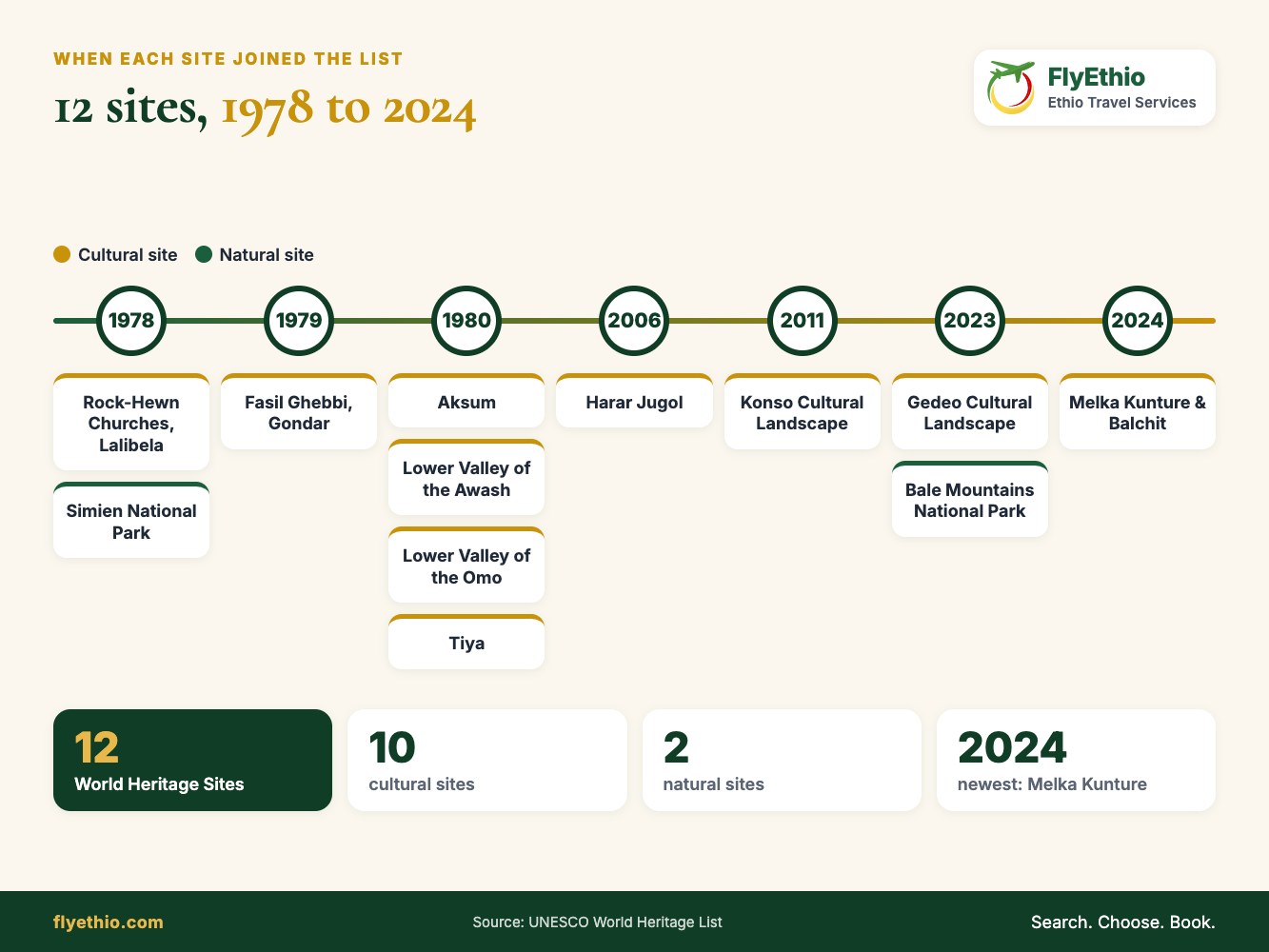
Today Ethiopia has 12 properties on the UNESCO World Heritage List: 10 cultural sites and 2 natural sites. Together they tell a story that runs from the earliest human ancestors to living traditions that are still part of daily life. Here is a traveler's guide to all twelve, with what makes each one special and how to fit them into a trip.
Ethiopia's UNESCO Sites at a Glance
| Site | Type | Inscribed | Nearest gateway |
|---|---|---|---|
| Rock-Hewn Churches, Lalibela | Cultural | 1978 | Lalibela |
| Simien National Park | Natural | 1978 | Gondar |
| Fasil Ghebbi, Gondar Region | Cultural | 1979 | Gondar |
| Aksum | Cultural | 1980 | Aksum |
| Lower Valley of the Awash | Cultural | 1980 | Afar region |
| Lower Valley of the Omo | Cultural | 1980 | Jinka / South Omo |
| Tiya | Cultural | 1980 | Addis Ababa (by road) |
| Harar Jugol, the Fortified Historic Town | Cultural | 2006 | Dire Dawa |
| Konso Cultural Landscape | Cultural | 2011 | Arba Minch |
| Gedeo Cultural Landscape | Cultural | 2023 | Hawassa / Dilla |
| Bale Mountains National Park | Natural | 2023 | Robe |
| Melka Kunture and Balchit | Cultural | 2024 | Addis Ababa (by road) |
1. Rock-Hewn Churches, Lalibela
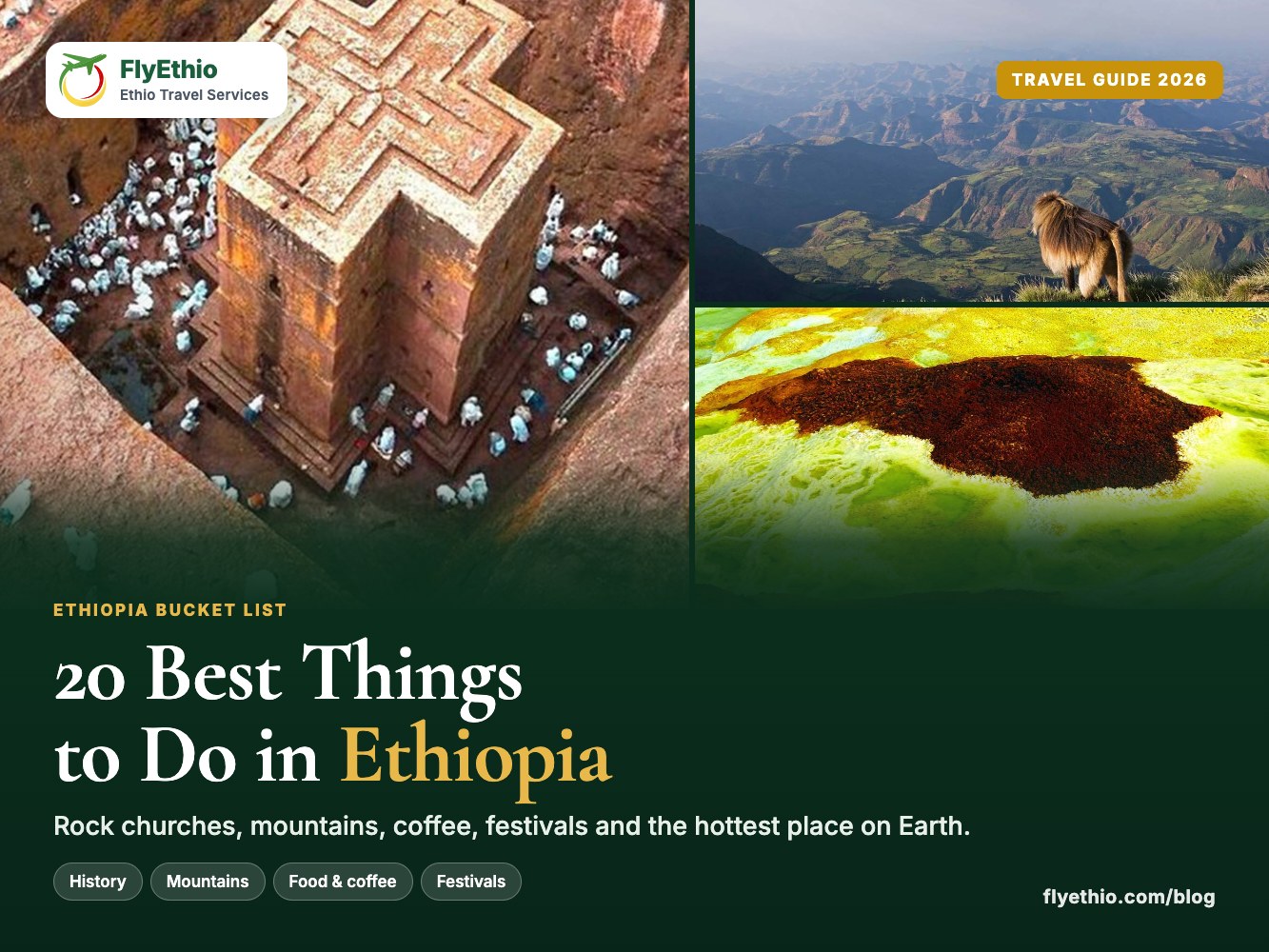
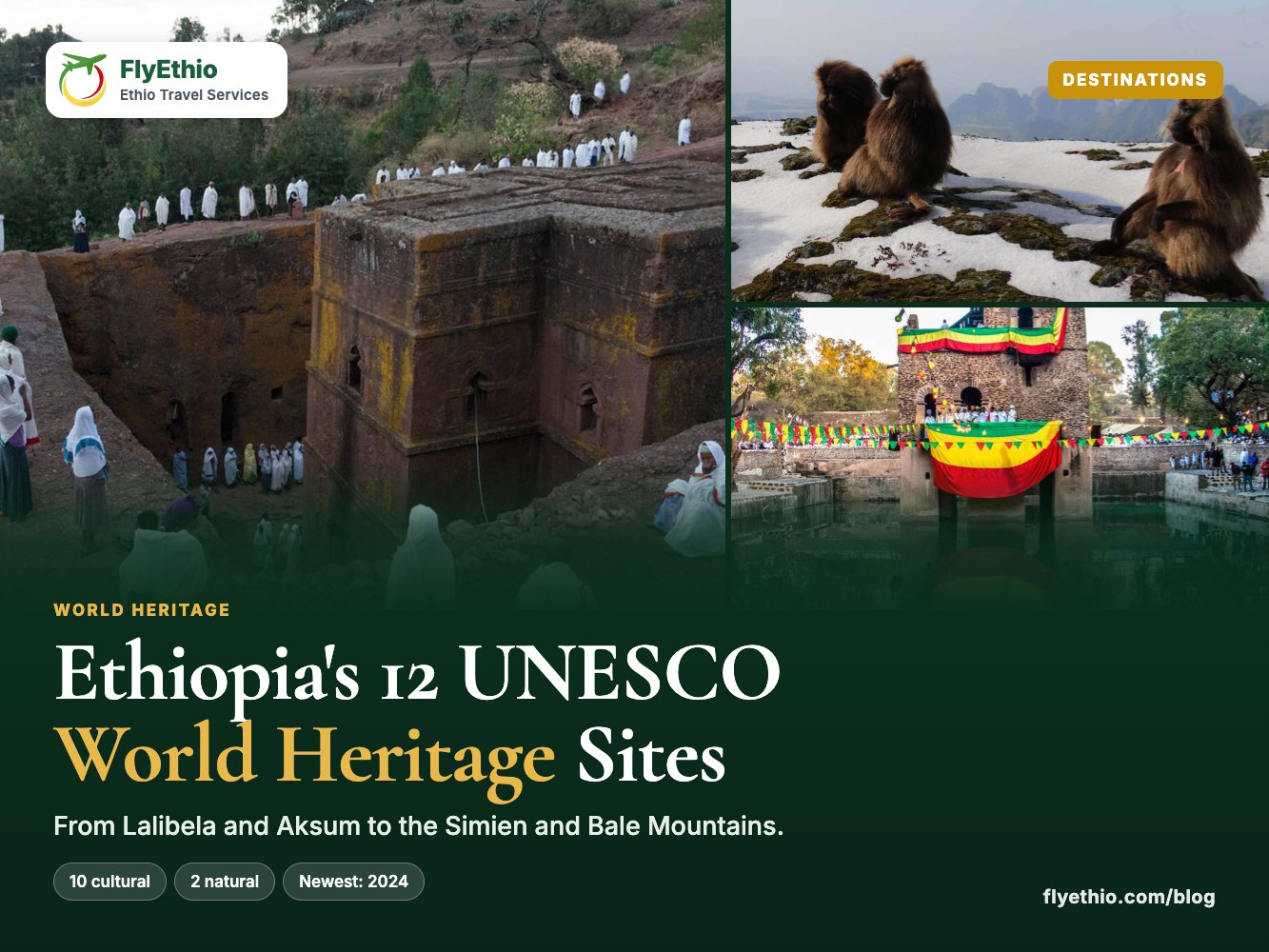
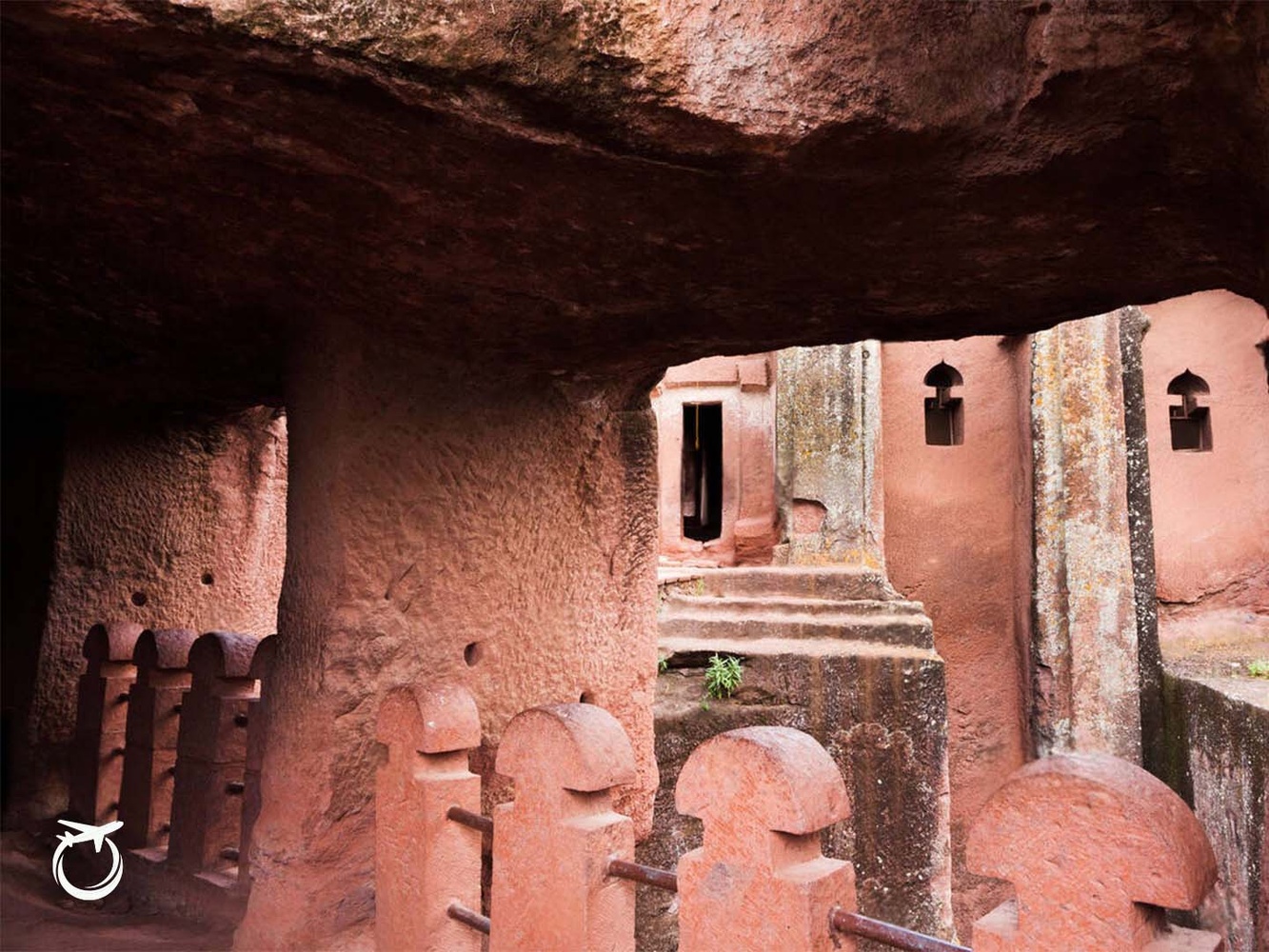
Lalibela was one of the very first places on the World Heritage List in 1978. Its eleven medieval churches were carved downward into rock, connected by trenches, tunnels and passageways, and they are still places of worship today. The cross-shaped Bete Giyorgis (Church of St. George) is the most photographed, but every church has its own character. Read our full Lalibela travel guide and see flights on the Lalibela page.
Best for: architecture, history, culture and photography.
2. Simien National Park
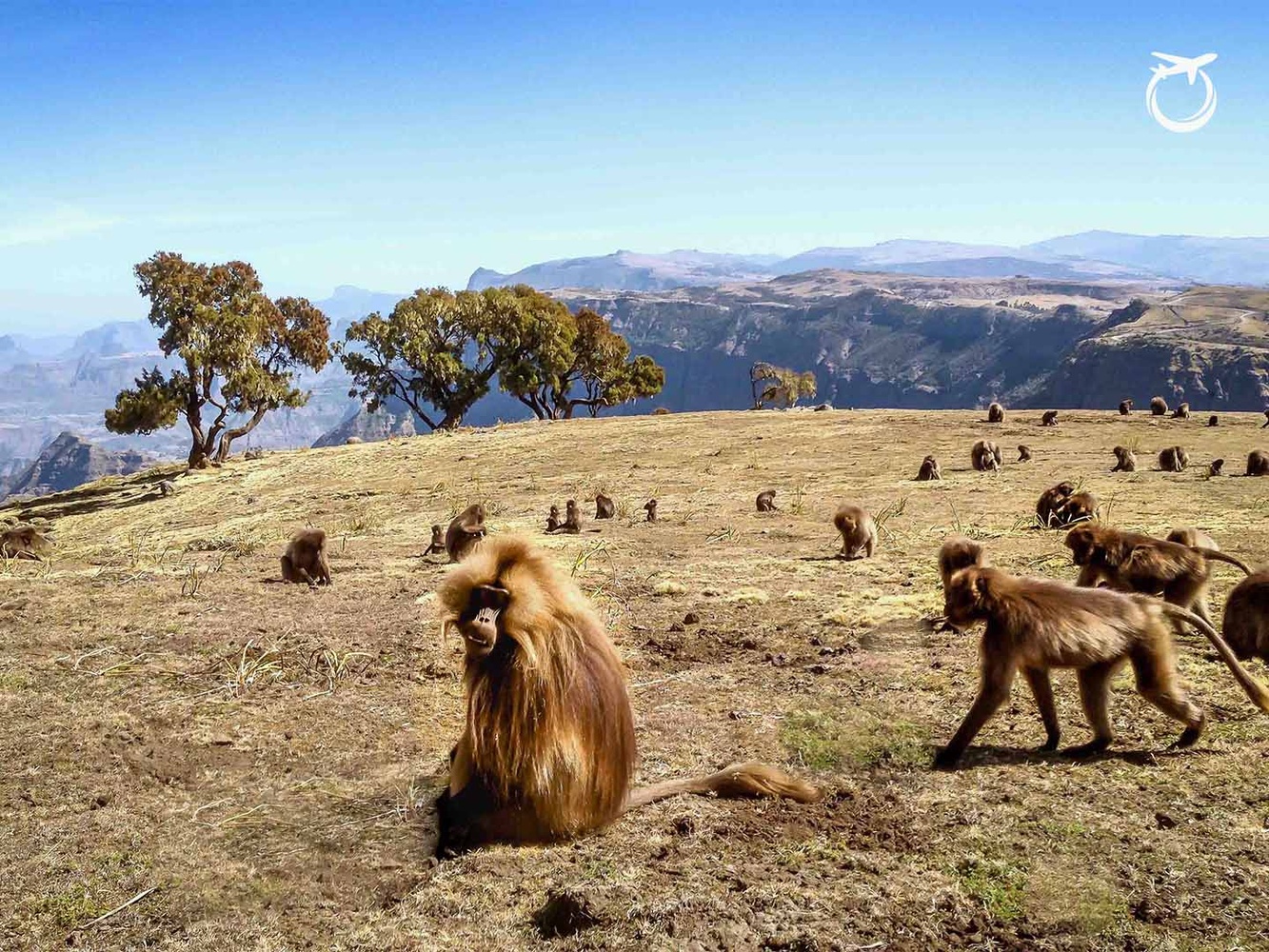
Simien National Park is a natural World Heritage Site of jagged peaks, deep valleys and sheer escarpments. It is home to rare animals, including the gelada monkey, the Walia ibex and the Ethiopian wolf. The park spent more than two decades on UNESCO's list of sites in danger before being removed in 2017 after conservation work, and today it is one of Africa's best trekking destinations. See our Simien Mountains trekking guide.
Best for: hiking, wildlife, mountains and nature.
3. Aksum
Aksum was the heart of the Aksumite kingdom, one of the great powers of the ancient world, trading with Rome, Arabia and India. Its monolithic stelae, royal tombs, castle ruins and inscriptions show how advanced the kingdom was. Aksum also has deep religious meaning: the Church of Our Lady Mary of Zion is believed by Ethiopian Orthodox Christians to hold the Ark of the Covenant.
Best for: ancient history, archaeology and culture.
4. Fasil Ghebbi, Gondar Region
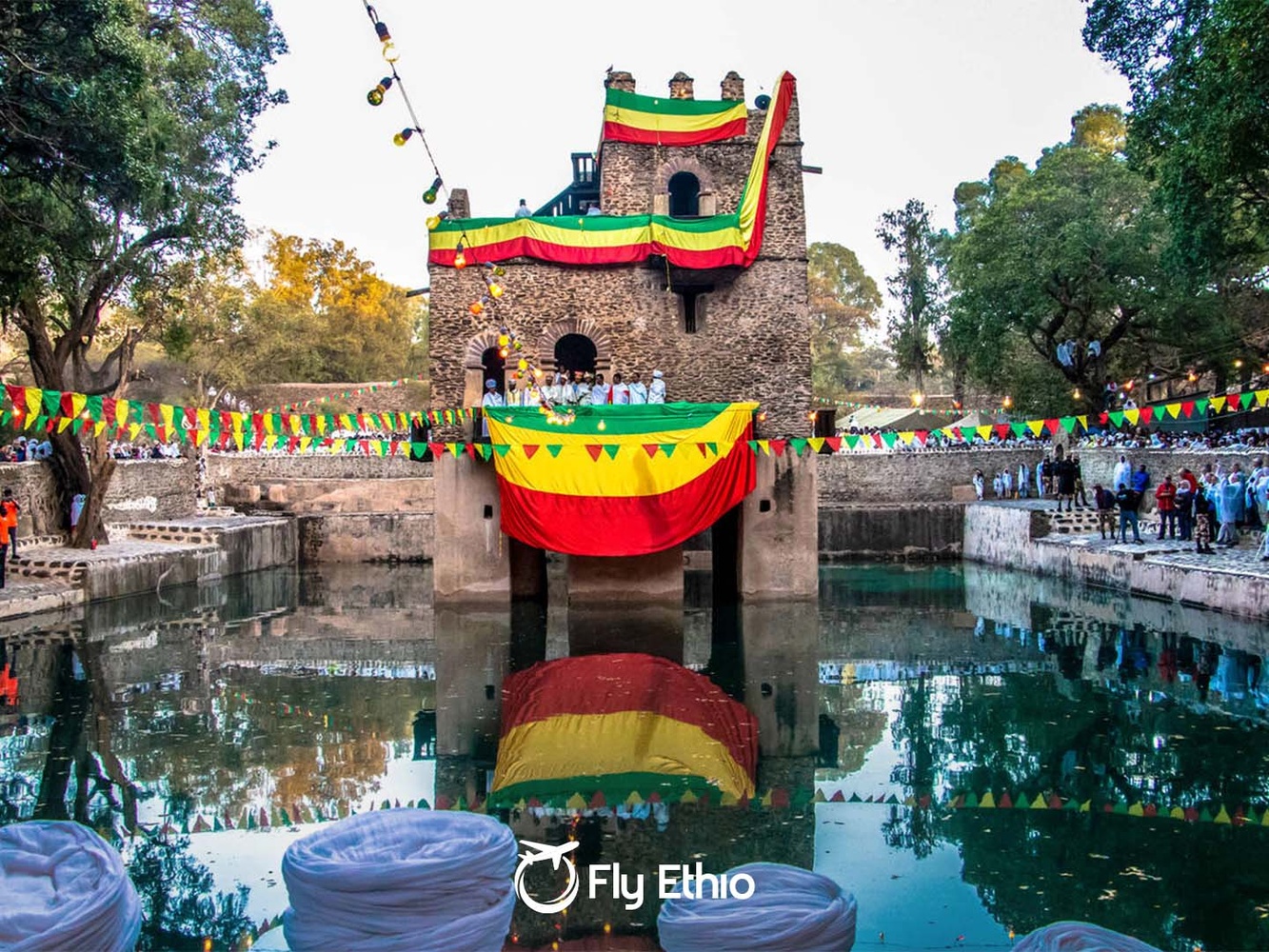
From the 16th and 17th centuries, Gondar was the royal capital of Ethiopia. Fasil Ghebbi, the fortified royal enclosure founded by Emperor Fasilides, contains castles, palaces, churches, a library and banqueting halls that blend Ethiopian, Arab and European influences. Fasilides' Bath becomes the center of the city's Timkat celebrations each January (see our Timkat guide). Plan your visit on our Gondar page.
Best for: history, architecture and photography.
5. Harar Jugol, the Fortified Historic Town
Harar Jugol is a walled city in eastern Ethiopia known for its narrow alleys, colorful traditional houses and long role as a center of Islamic learning and trade. UNESCO notes its 82 mosques and 102 shrines, and the Harari house, with its unique interior design, is part of what makes the town special. In the evening, don't miss the hyena feeding just outside the walls. Harar is usually reached by flying to Dire Dawa.
Best for: culture, history, architecture and local life.
6. Konso Cultural Landscape
The Konso Cultural Landscape in southern Ethiopia shows how a community adapted to a dry, rocky environment over more than 400 years. Stone terraces protect the soil, fortified hilltop towns are built with care, and carved wooden waka statues honor respected members of the community. It is a living landscape, not a museum. Konso is a road trip from Arba Minch.
Best for: culture, landscapes and traditional communities.
7. Lower Valley of the Awash
The Lower Valley of the Awash is one of the most important places on Earth for understanding human origins. It was here, at Hadar in 1974, that scientists found the remains of Lucy, about 3.2 million years old. You can see Lucy's story at the National Museum in Addis Ababa, which is part of our best things to do in Addis Ababa.
Best for: archaeology, anthropology and science.
8. Lower Valley of the Omo
The Lower Valley of the Omo is a prehistoric site where fossils have added greatly to what we know about human evolution, including some of the oldest known remains of our own species. The wider Omo region is also known for its many cultural communities, so a visit here combines deep time with living culture.
Best for: archaeology, anthropology and culture.
9. Tiya
Tiya, south of Addis Ababa, is one of the most important of the many stelae sites in the region. UNESCO lists 36 monuments here, including 32 carved stelae decorated with mysterious symbols, and their full meaning is still studied today. It makes a good day trip from the capital.
Best for: archaeology, history and an easy day trip.
10. Gedeo Cultural Landscape
Added to the list in 2023, the Gedeo Cultural Landscape is known for its layered agroforestry, where enset and coffee grow under the shade of native trees, and for ancient stelae sites. It shows how people and nature can live together over generations, and it is a must for coffee lovers.
Best for: nature, culture, coffee and agriculture.
11. Bale Mountains National Park
Also inscribed in 2023, Bale Mountains National Park protects the largest area of Afroalpine habitat in Africa, the Sanetti Plateau, plus the Harenna Forest. It is the best place in the world to see the endangered Ethiopian wolf, and it is rich in birds and plants found nowhere else.
Best for: wildlife, hiking, nature and photography.
12. Melka Kunture and Balchit
Ethiopia's newest World Heritage Site, inscribed in 2024, lies along the upper Awash River south of Addis Ababa. Melka Kunture and Balchit preserve archaeological and paleontological evidence that spans an enormous stretch of human prehistory, including stone tools and the Balchit obsidian outcrops that early humans used to make them.
Best for: archaeology and prehistory.
Why Ethiopia's UNESCO Sites Are Worth the Trip
Ethiopia's World Heritage Sites are not just old places. They tell the story of human origins, ancient kingdoms, religious traditions, trade, architecture and how people have lived with the land for centuries. You don't have to be a history expert to enjoy them. Some travelers come for the churches, some for the mountains, some for the culture and some just for something they have never seen before.
How to Plan a UNESCO Trip in Ethiopia
- Northern historic route: Lalibela, Gondar (Fasil Ghebbi), the Simien Mountains and Aksum are usually combined in one trip of 10 to 14 days using domestic flights.
- From Addis Ababa: Tiya and Melka Kunture are both easy day trips by road.
- South and east: combine Konso with Arba Minch, Gedeo with Hawassa, and Harar with Dire Dawa. Bale needs a few days of its own.
- When to go: the dry season from October to March is best for most sites. See our best time to visit Ethiopia guide.
- Before you book: conditions in parts of northern Ethiopia, including the Aksum area, can change quickly. Check your government's latest travel advice before planning that part of the trip.
For a wider list of experiences, see our 20 best things to do in Ethiopia and our guide to historical places in Ethiopia.
Ready to Explore Ethiopia?
Choose the sites that interest you most, pick your dates and search flights to Addis Ababa. We can also book your domestic flights, hotels and tours together, or you can build a trip with our package builder. Questions? Talk to our team.
Search. Choose. Book with FlyEthio.
Frequently Asked Questions
How many UNESCO World Heritage Sites does Ethiopia have?
Ethiopia has 12 UNESCO World Heritage Sites: 10 cultural sites and 2 natural sites, Simien National Park and Bale Mountains National Park. The newest is Melka Kunture and Balchit, inscribed in 2024.
What was Ethiopia's first UNESCO World Heritage Site?
The Rock-Hewn Churches of Lalibela and Simien National Park were both inscribed in 1978, the first year sites were added to the World Heritage List.
Which UNESCO sites in Ethiopia can I visit from Addis Ababa in a day?
Tiya and Melka Kunture and Balchit are both south of Addis Ababa and can be visited on a day trip by road.
Which UNESCO site in Ethiopia should I visit first?
Most first-time visitors start with Lalibela, then add Gondar and the Simien Mountains. If you love wildlife, Bale Mountains National Park is a great choice. If you are interested in human origins, start at the National Museum in Addis Ababa to see Lucy.
Where is Lucy from?
Lucy was found in 1974 at Hadar, in the Lower Valley of the Awash, which is a UNESCO World Heritage Site. Lucy is about 3.2 million years old. Her remains are kept at the National Museum of Ethiopia in Addis Ababa, where visitors can see a cast and learn her story.