What if you could travel through millions of years of history without leaving one country?
In Ethiopia you can stand next to monuments carved around 2,000 years ago, walk through a walled city that has been a center of trade and learning for centuries, and visit churches cut into solid rock about 800 years ago. You can even see where some of our earliest human ancestors lived.
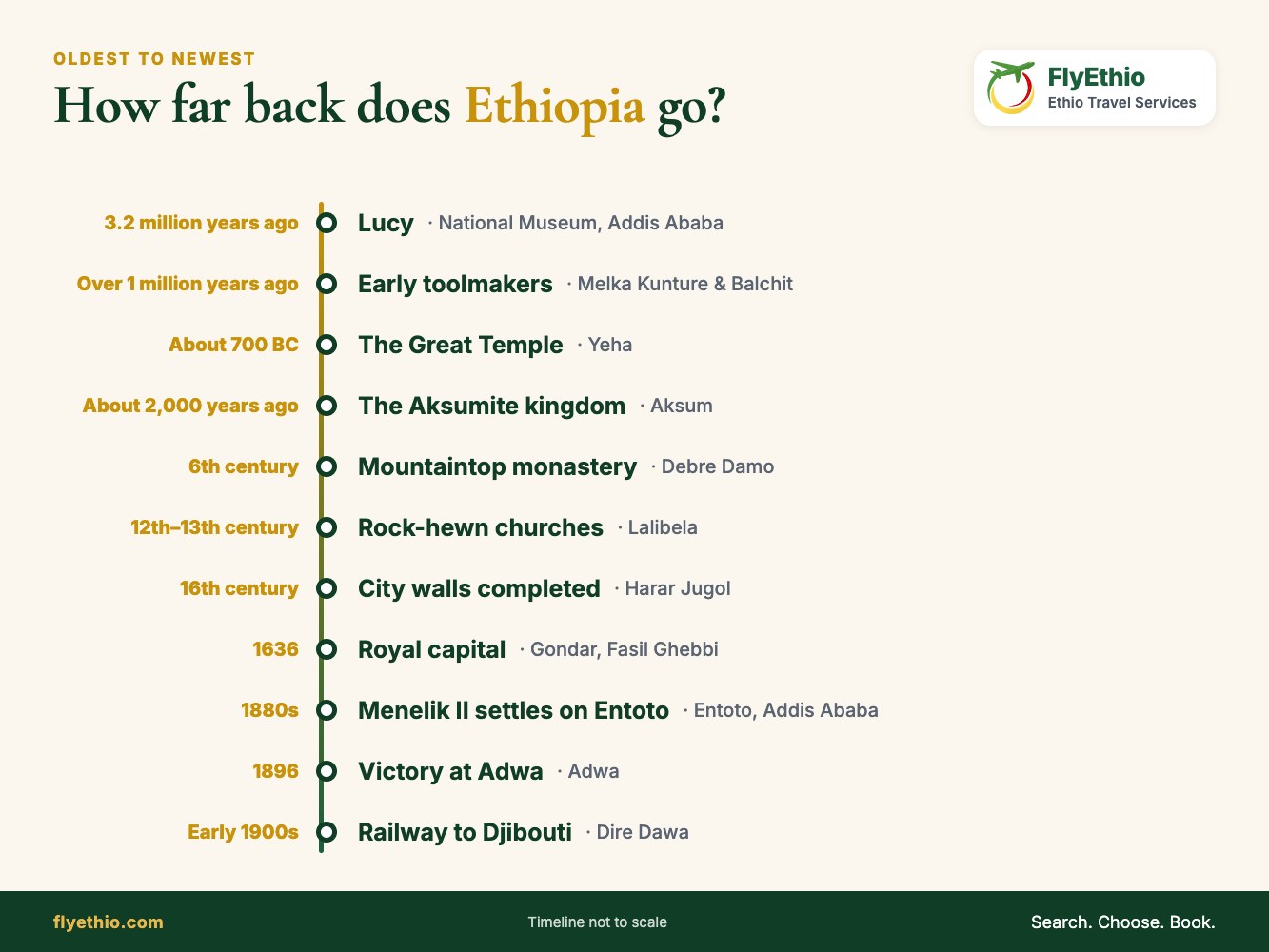
Ethiopia's history runs through ancient kingdoms, medieval dynasties, religious traditions, scientific discoveries and the events that shaped the modern country. So instead of just asking "Where should I go?", this guide asks a different question: how far back does each place take you? Here are 15 historical places in Ethiopia, ordered from the oldest story to the newest.
1. National Museum of Ethiopia: Millions of Years
Start in Addis Ababa. The National Museum of Ethiopia takes you further back than any other stop on this list. It is home to Lucy (Dinknesh), the famous fossil hominid about 3.2 million years old found in the Afar region, alongside exhibits on Ethiopian art, royal history and culture. It is the perfect introduction before you travel anywhere else. Find more ideas in our guide to the best things to do in Addis Ababa.
How far back: about 3.2 million years.
2. Melka Kunture and Balchit: Over a Million Years
Along the upper Awash River south of Addis Ababa, Melka Kunture is one of the most important prehistoric sites in Africa. Stone tools, fossils and the Balchit obsidian outcrops show how early humans lived and made tools here over an enormous stretch of time. It became a UNESCO World Heritage Site in 2024 and is an easy day trip from the capital.
How far back: more than a million years of human prehistory.
3. Yeha: Around 2,700 Years
Yeha, in the north of the country, is home to the Great Temple, one of the oldest standing buildings in sub-Saharan Africa. Its large, carefully cut stone walls date to around the 7th century BC, long before the rise of Aksum.
How far back: around 2,700 years.
4. Aksum: Around 2,000 Years
Aksum was the capital of the Aksumite kingdom, which traded with Rome, Arabia and India and minted its own coins. Its giant carved stelae, royal tombs and palace ruins are a UNESCO World Heritage Site. Aksum is also central to Ethiopian Orthodox Christianity, and the Church of Our Lady Mary of Zion is one of the country's holiest places.
How far back: around 2,000 years.
5. Debre Damo: Around 1,400 Years
Debre Damo is a monastery founded in the 6th century on top of a flat mountain. Getting there is part of the experience: the only way up is to climb the cliff with a rope. Its church is one of the oldest in Ethiopia. Note that by long tradition only men may enter the monastery.
How far back: around 1,400 years.
6. Lalibela: Around 800 Years
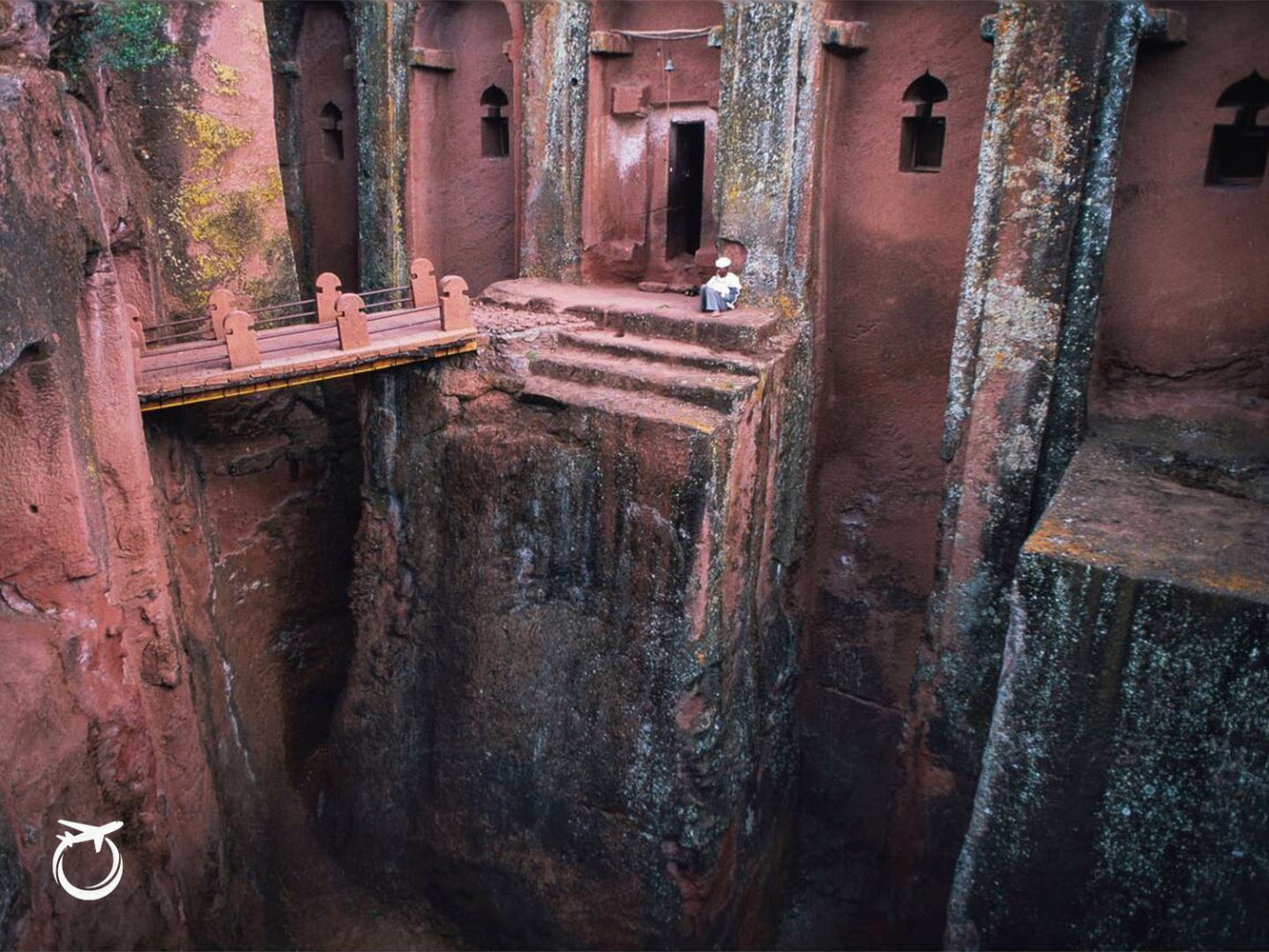
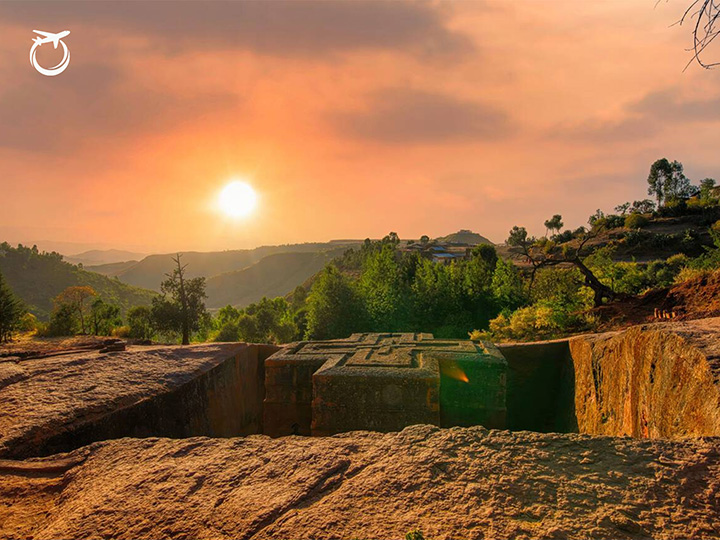
Lalibela's eleven rock-hewn churches were carved in the late 12th and early 13th centuries during the reign of King Lalibela, who wanted to create a "New Jerusalem." They are still living places of worship, which makes a visit feel like history in the present tense. Our Lalibela travel guide has everything you need to plan.
How far back: around 800 years.
7. Tiya: Medieval Stelae
Tiya, south of Addis Ababa, has dozens of carved stone stelae decorated with symbols that researchers are still trying to understand. They are believed to mark burial sites from medieval times. Tiya is a UNESCO World Heritage Site and makes a good day trip from the capital.
How far back: roughly the 10th to 15th centuries, by most estimates.
8. Harar Jugol: Walls Built From the 13th to 16th Centuries
Harar, in eastern Ethiopia, has been a center of trade and Islamic learning for centuries. The walls of the old town, Harar Jugol, were completed in the 16th century, and inside are narrow alleys, mosques, shrines and colorful Harari houses. It is one of the most distinctive cities in the Horn of Africa.
How far back: more than 500 years for the walls, and the city is older still.
9. Lake Tana's Monasteries: Centuries of Christian Heritage
The islands and shores of Lake Tana are home to monasteries, some founded as early as the 14th century, that have protected painted manuscripts, crosses and colorful murals for generations. A boat trip from Bahir Dar turns into a journey through religious history.
How far back: up to about 700 years.
10. Gondar: Since 1636
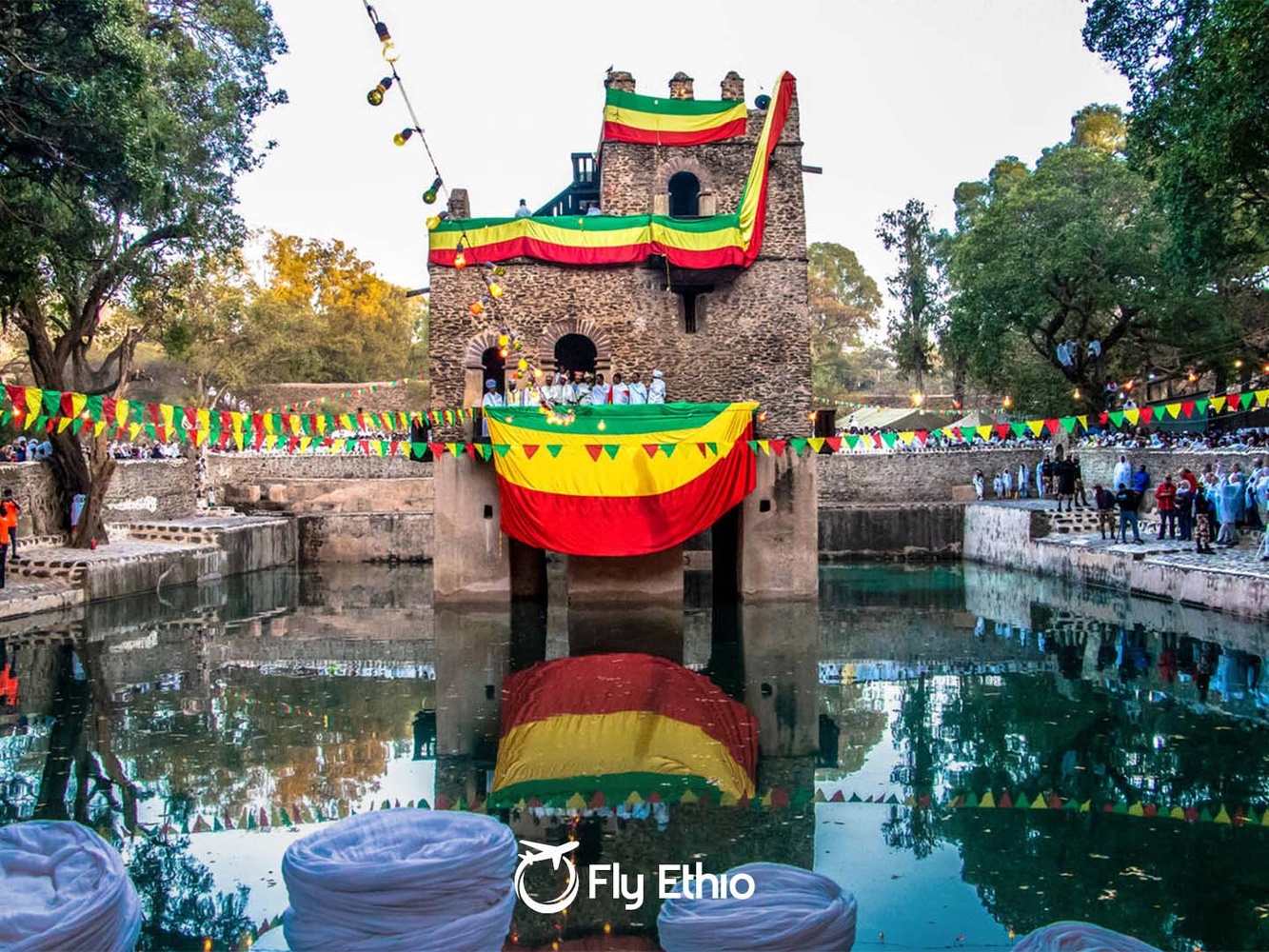
In 1636, Emperor Fasilides made Gondar his capital, and the royal enclosure of Fasil Ghebbi grew into a complex of castles, palaces, churches and a library. Gondar was the capital for more than two centuries, and its buildings mix Ethiopian, Arab and European styles. Plan your trip on our Gondar page, and time it with Timkat if you can (see our Timkat guide).
How far back: nearly 400 years.
11. Entoto: The Beginning of Modern Addis Ababa
Before Addis Ababa existed, Emperor Menelik II and Empress Taytu set up their capital on the Entoto hills in the 1880s. Today you can visit historic churches, walk in the forest and look down over the city that grew below.
How far back: about 140 years.
12. Menelik II Palace and Unity Park: Late 19th Century
Menelik II's palace compound in Addis Ababa was the seat of Ethiopian rulers for over a century. Part of it is now open to the public as Unity Park, where you can see historic buildings, royal halls and gardens.
How far back: the 1890s.
13. Adwa: 1896
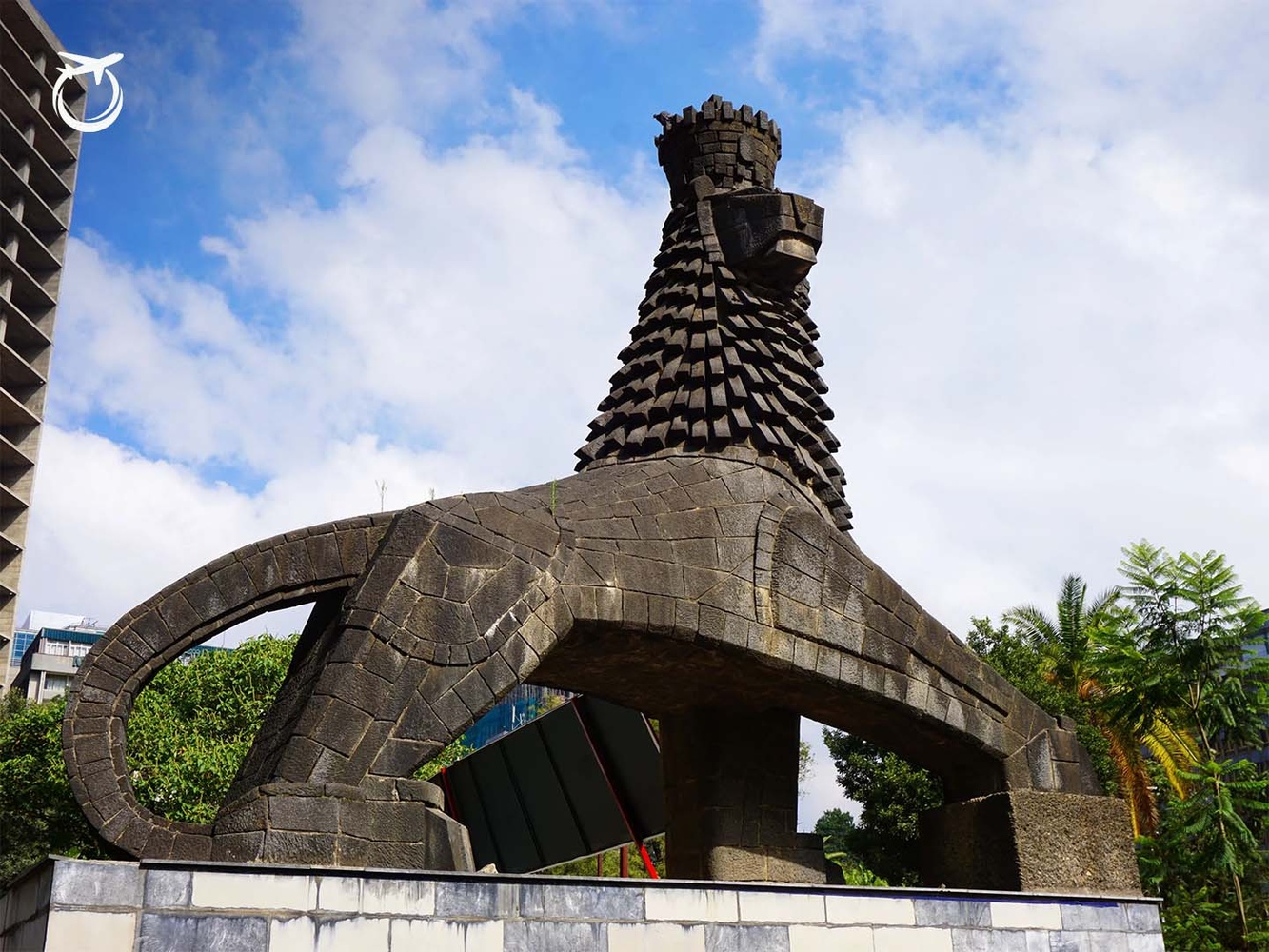
On March 1, 1896, Ethiopian forces under Emperor Menelik II defeated an invading Italian army near the northern town of Adwa. The victory became a defining moment in Ethiopian history and a symbol of African independence. In Addis Ababa, the Adwa Victory Memorial tells the story in the heart of the city.
How far back: about 130 years.
14. Dire Dawa: Early 20th Century Railway History
Dire Dawa grew up around the railway between Addis Ababa and Djibouti in the early 1900s. Its old railway station and tree-lined colonial-era streets make it different from any other Ethiopian city. It is also the gateway for visiting Harar.
How far back: over 120 years.
15. Red Terror Martyrs Memorial Museum: 20th Century
Not all history is easy to look at. This museum in Addis Ababa remembers the victims of the Red Terror of the late 1970s through photos, personal belongings and testimony. It is a moving visit and an important part of understanding modern Ethiopia.
How far back: about 50 years.
How Far Back Does Ethiopia's History Go?
A trip through Ethiopia can take you from:
- 3.2 million years ago: Lucy and our earliest ancestors
- Over a million years ago: the toolmakers of Melka Kunture
- About 2,700 years ago: the temple at Yeha
- About 2,000 years ago: the kingdom of Aksum
- About 800 years ago: the rock churches of Lalibela
- 1636: the castles of Gondar
- 1896: the Battle of Adwa
- The 20th century: modern Ethiopia
And that's only a small part of the story.
Plan Your History Trip
- Start in Addis Ababa: the National Museum, Entoto, Unity Park, the Adwa Victory Memorial and the Red Terror Museum can fill two or three days. Day trips reach Tiya and Melka Kunture.
- Fly north: domestic flights connect Addis Ababa with Lalibela, Gondar, Bahir Dar and Aksum, the classic historic route.
- Go east: fly to Dire Dawa and continue by road to Harar.
- Check before you go: Yeha, Aksum, Debre Damo and Adwa are in the Tigray region, where conditions can change quickly. Check your government's latest travel advice before planning that part of the trip.
For more ideas, see the 12 UNESCO World Heritage Sites in Ethiopia and our list of the 20 best things to do in Ethiopia.
Ethiopia Isn't Just a Destination. It's a Journey Through Time.
You don't have to be a historian to enjoy Ethiopia's historical places. Come for the architecture, the mountains, the churches, the food or simple curiosity. Once you start exploring, you will see that many Ethiopian destinations are not just places to visit. They are chapters of history you can walk through.
Ready? Search flights to Addis Ababa, let us add domestic flights and hotels, or ask our team to plan the route with you.
Search. Choose. Book with FlyEthio.
Frequently Asked Questions
What is the oldest historical place in Ethiopia?
The oldest are prehistoric sites. Lucy, found in the Afar region and kept at the National Museum in Addis Ababa, is about 3.2 million years old, and Melka Kunture holds evidence of early toolmakers going back more than a million years. The oldest standing building is the Great Temple at Yeha, from around the 7th century BC.
What are the most famous historical sites in Ethiopia?
The best known are the rock-hewn churches of Lalibela, the stelae of Aksum, the castles of Gondar and the walled city of Harar Jugol. All four are UNESCO World Heritage Sites.
Which historical places can I visit in Addis Ababa?
In Addis Ababa you can visit the National Museum of Ethiopia, the Entoto hills, Unity Park at Menelik II's palace, the Adwa Victory Memorial and the Red Terror Martyrs Memorial Museum.
How many days do I need for Ethiopia's historic route?
Allow 10 to 14 days to see Lalibela, Gondar, Bahir Dar and Aksum using domestic flights. With a week, choose two of them plus a couple of days in Addis Ababa.
Why is the Battle of Adwa important?
At Adwa on March 1, 1896, Ethiopian forces defeated an invading Italian army. The victory kept Ethiopia independent and became a symbol of African resistance to colonialism.